For generations, Naturally Molino Borgioli
1600

LATE 1600s
The Borgioli family lives and works on a farm belonging to the Medici estate of Le Ginestre, in the parish of San Martino in Campo (now the municipality of Carmignano, Prato).
1700

1751
Leonardo Borgioli and his family live and work in three mills along the Elzana River, in the parish of San Michele in Comeana.
1700

1776
In the “Register of Roads and Buildings” of the municipality of Carmignano (Prato), Giovanbattista Borgioli is listed as the tenant of a two-millstone mill along the Elzana River.
1800
1879
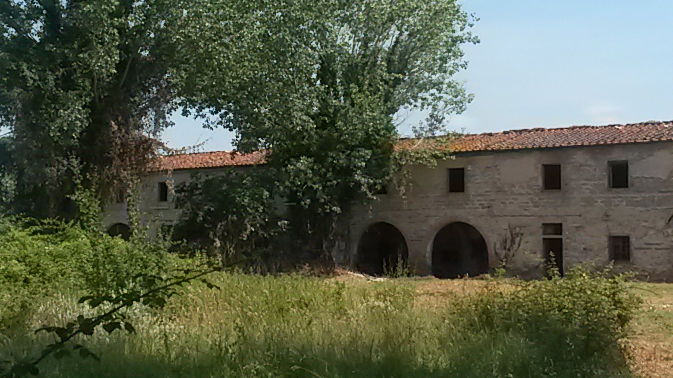
Angiolo Borgioli and his brothers purchase land adjacent to Via del Ferro in Cafaggio and also acquire the water usage rights of the Romita canal, also known as the Palasaccio canal. Construction immediately begins on a two- or three-millstone mill capable of producing 30 quintals of flour per day.
1900

1932
Purchase of land in Prato outside Porta Fiorentina (later Viale Montegrappa) for the construction of a roller mill equipped with Bühler rollers, with a capacity of 70–80 quintals per 24 hours.
1900

1933
The Prato mill (Via Fra’ Bartolomeo no. 151) begins milling in May 1933 under the company name “Borgioli Gino e F.llo” (Gino Borgioli & Brother).
1900

1940-1942
The mill building is expanded.
1900
1943
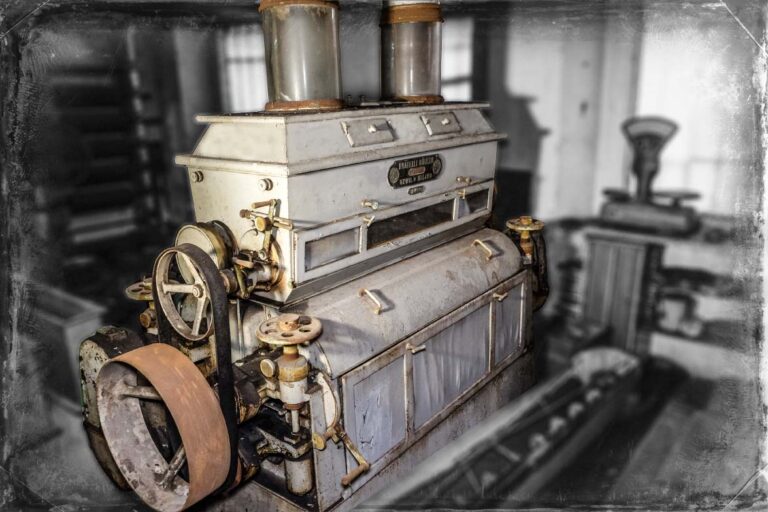
Inauguration, at the Prato mill on Viale Montegrappa, of a modern roller section and adjoining reinforced concrete building with wheat silos.
1900

1944
The American bombing on January 17 destroys the portion of the mill built in 1932.
1900

1945
Gino Borgioli acquires his brother’s shares.
1950

1952
The company “Figli di Gino Borgioli” (Sons of Gino Borgioli) is established.
1950

1955
“Figli di Gino Borgioli” becomes “Figli di Gino Borgioli di Franco e Mario Borgioli.”
1950
1963
The company “Molino Franco e Mario Borgioli” is established: land is purchased and construction begins on a new mill.
1950

1965
Construction of the modern Molino Borgioli in Calenzano, Florence.
1950

1967
The new mill is inaugurated; it can mill 1,100 quintals of durum wheat per 24 hours.
1950

1974
The mill is expanded. Thirty reinforced concrete storage cells are built for semolina and other milling products.
1950

1983
Borgioli semolina enters large-scale retail distribution (GDO) in 1 kg packages.
1950

1988
The Calenzano mill is expanded, increasing its milling capacity to 3,200 quintals per 24 hours
1950
1991
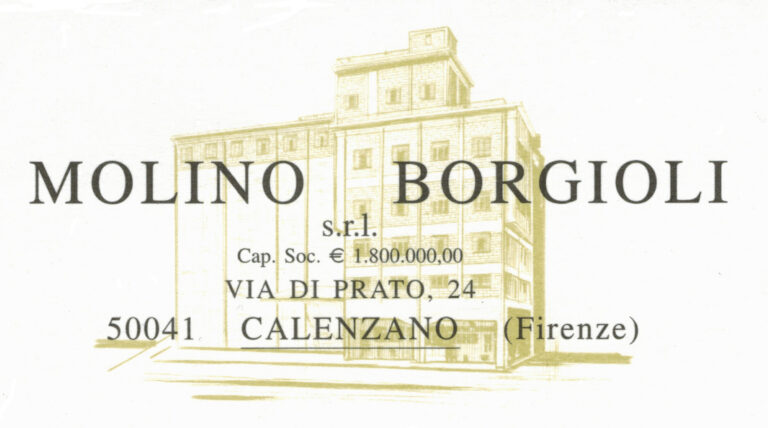
The company name changes to Molino Borgioli s.r.l.
1950

1993
Production of organic semolina begins in compliance with EEC Regulation No. 2092 of 1991, using wheat grown with respect for the environment and plant integrity, with natural fertilizers and without synthetic organic substances.
1950

1996
The packaging department is modernized and upgraded with a double automatic bagging machine.
2000

2003
The company structure changes and the mill becomes Molino Borgioli S.p.A.
2000

2005
With the addition of flour, the Molino Borgioli product line—available in large-scale retail distribution—is completed.
2000

2007
Wheat storage capacity is increased by an additional 6,000 tons, bringing the total to 24,000 tons.
2000

2017
Molino Borgioli renews its brand image to better communicate its values to the market.
2000

2018
Whole wheat semolina is also available in 1 kg packages.
2000

2024
Solar panels are installed to generate clean energy.
2000

2025
… and the story continues!

